온기 1 — 접촉의 순간 (Warmth 1 — The Moment of Touch)
수채화 / 2026
향설 김현지
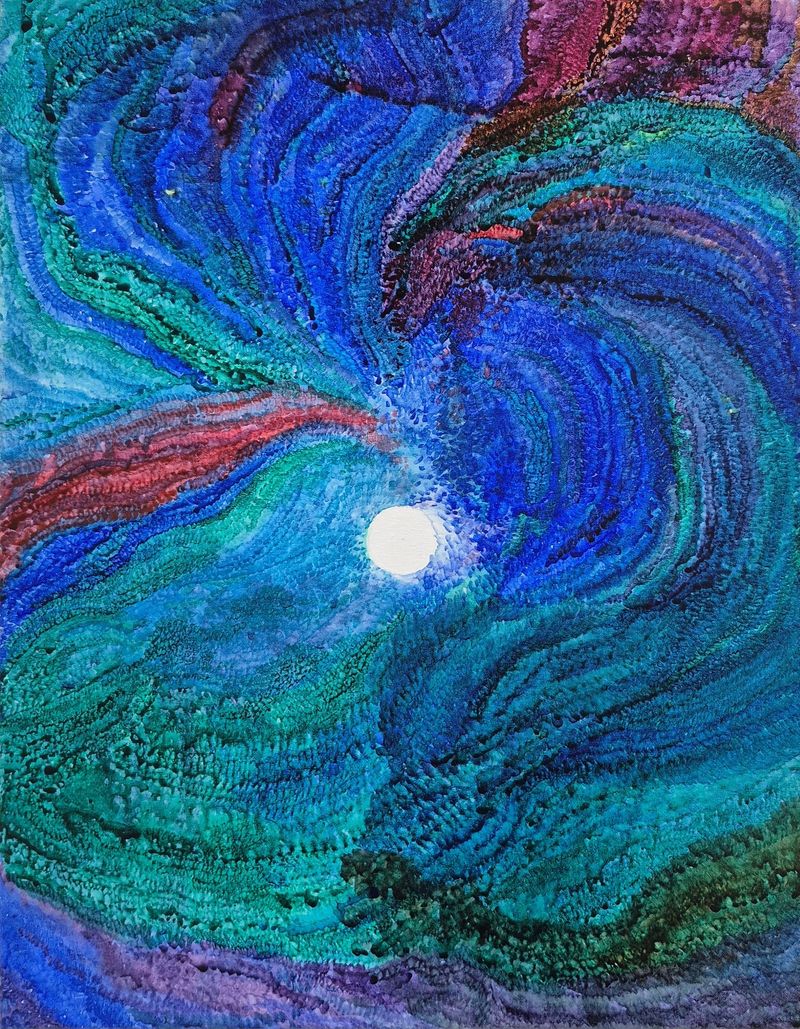
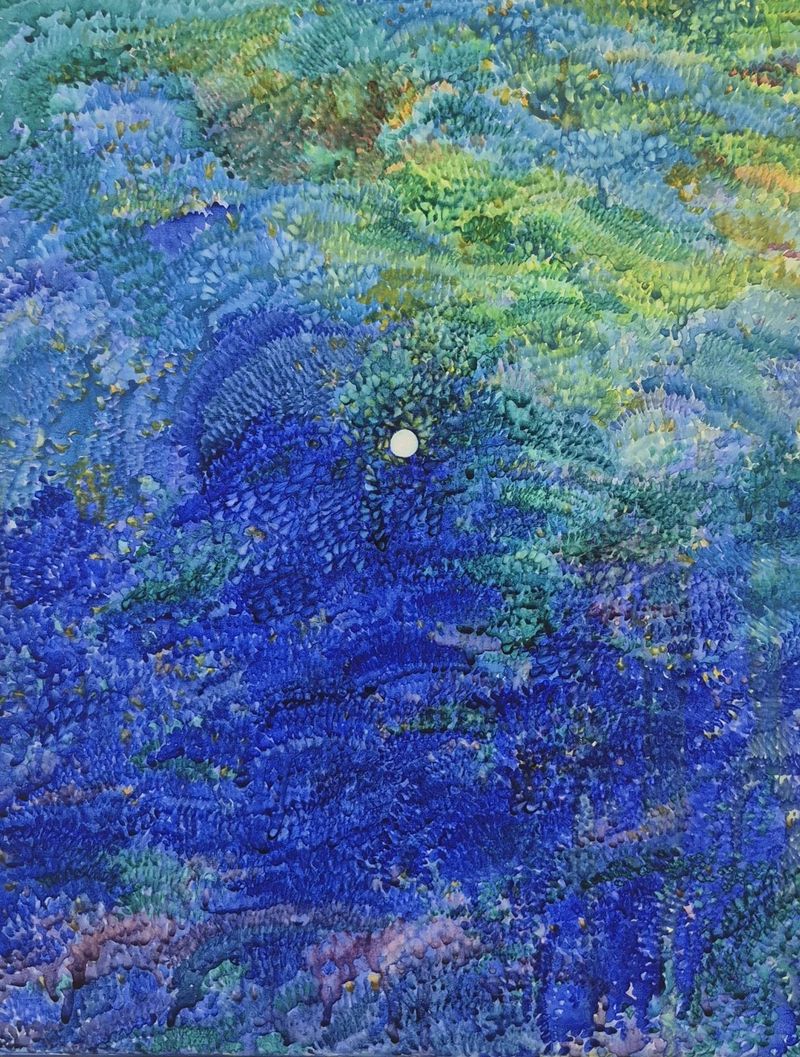
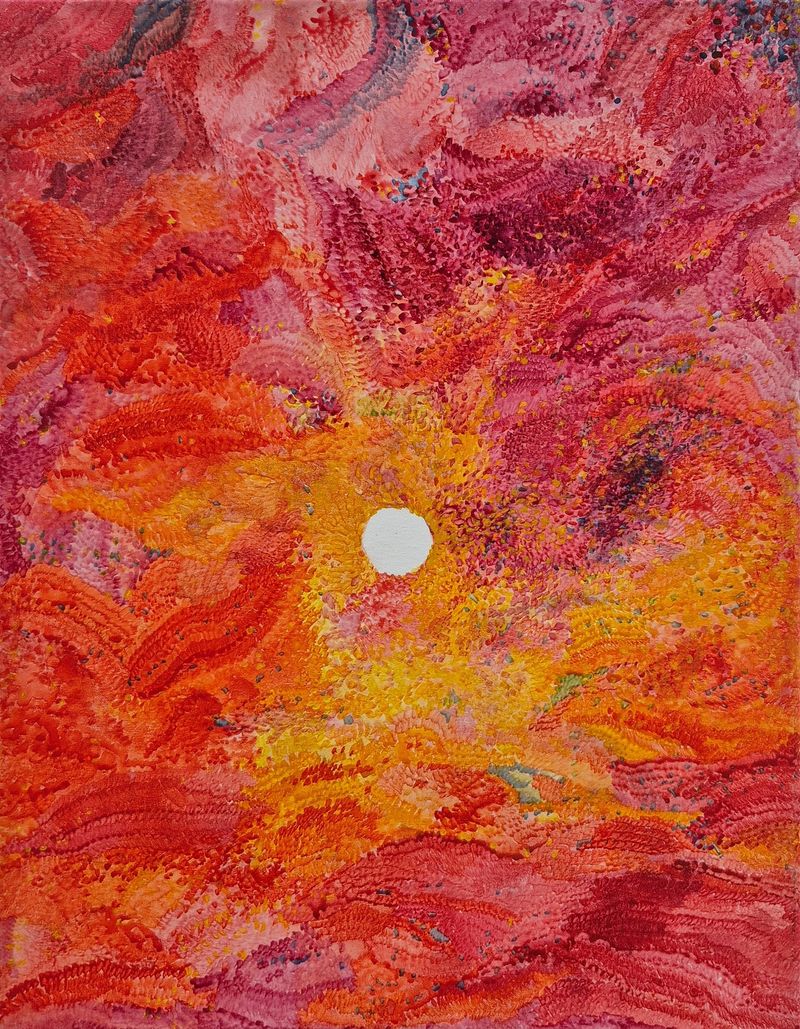
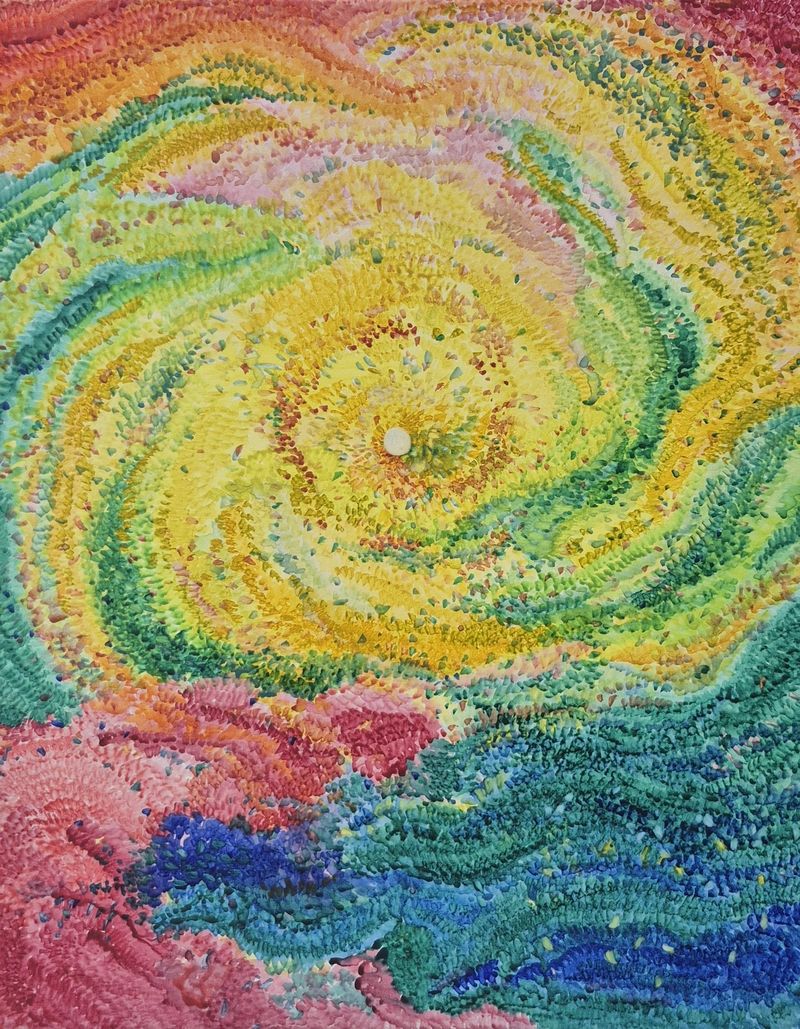
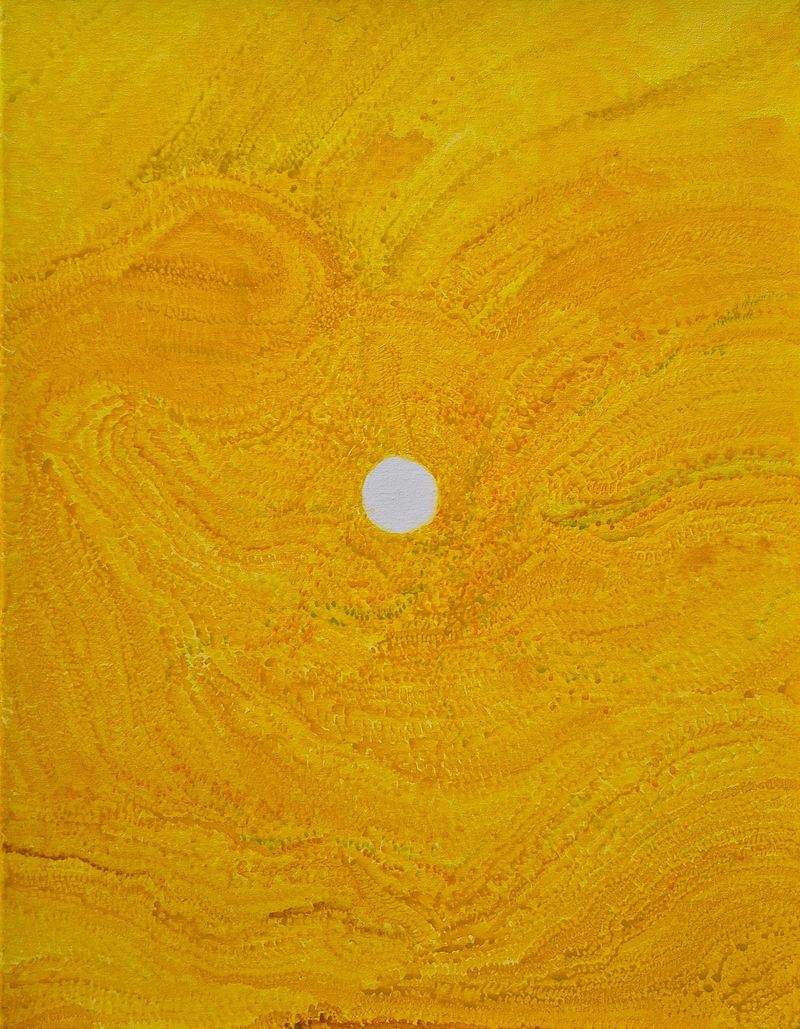
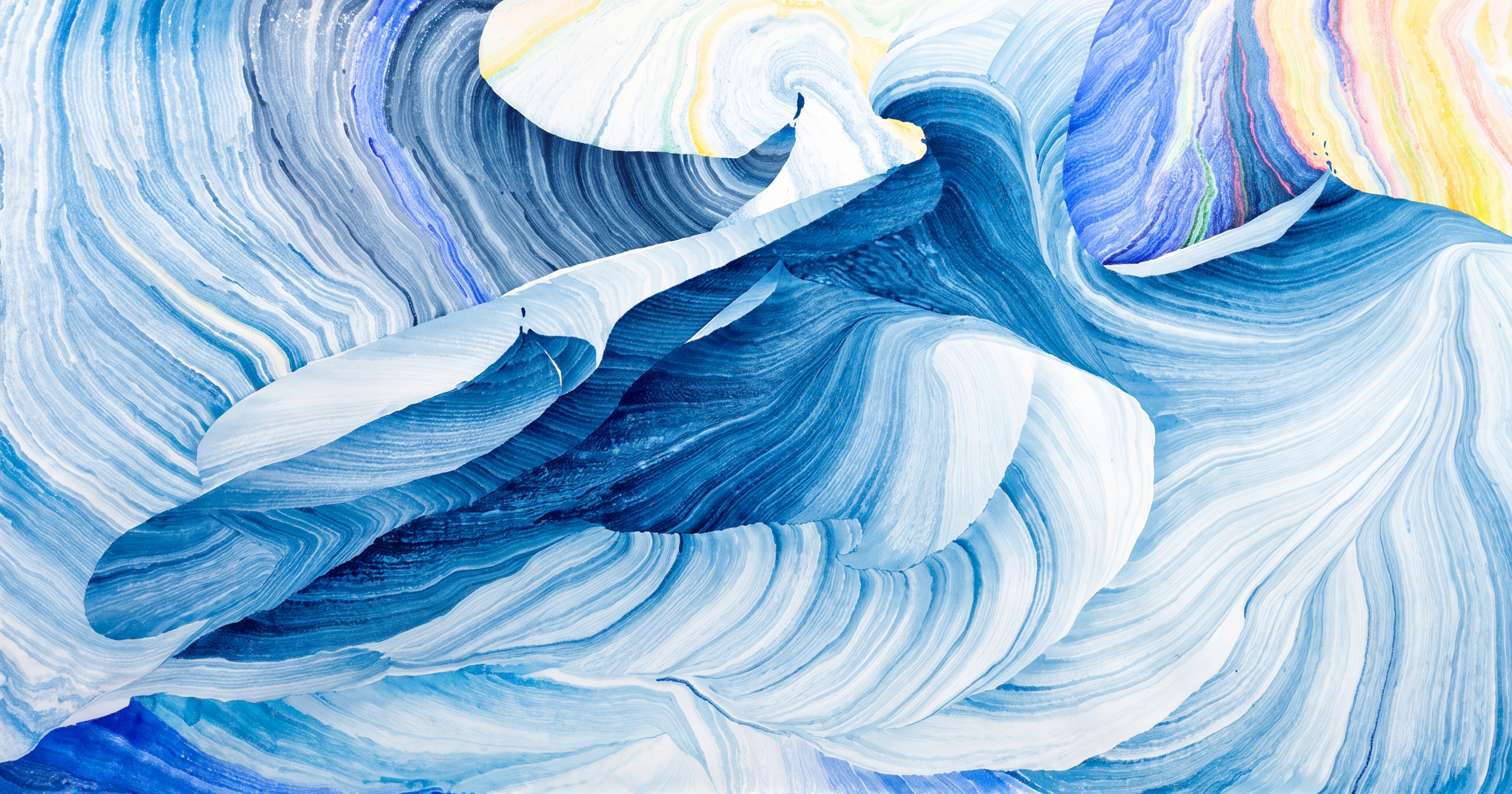
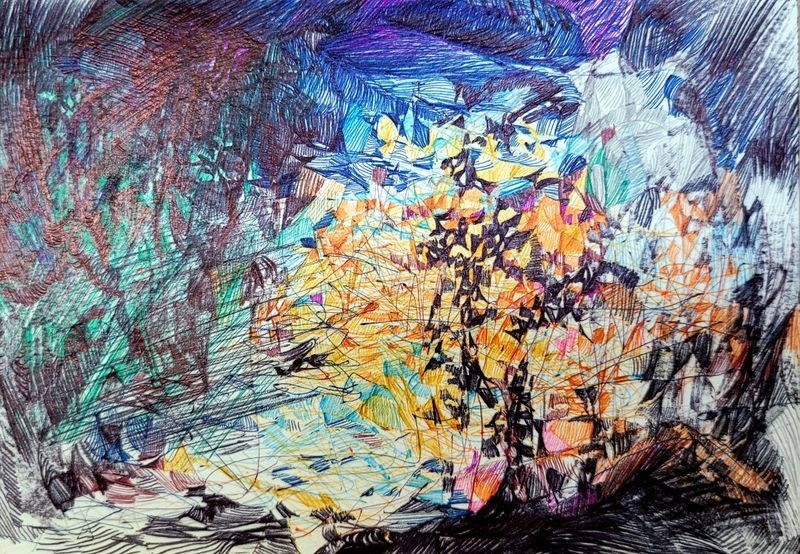
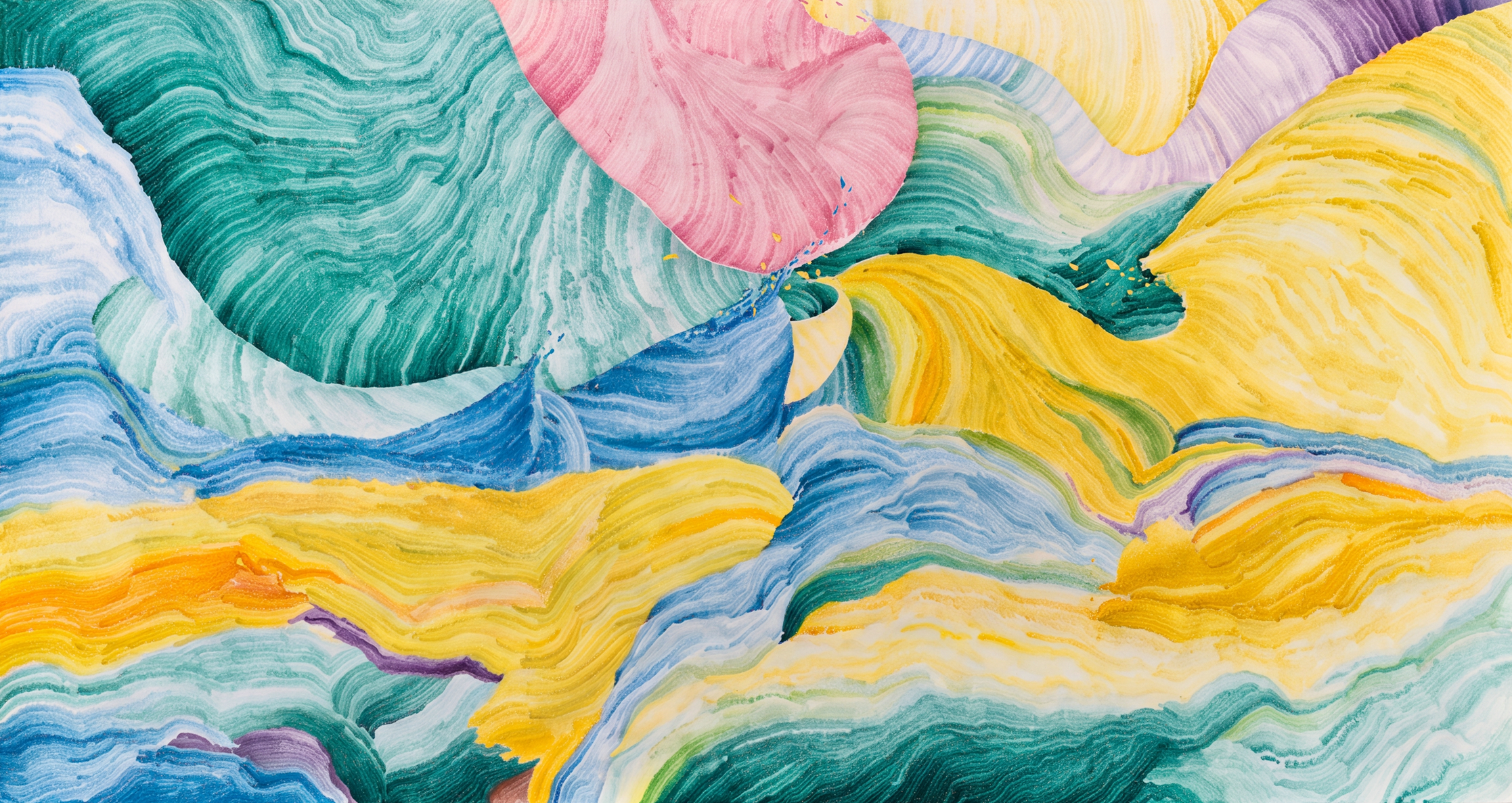
〈밤의 파동: 한강〉은 도시의 밤이 한강의 수면 위에 흩뿌리는 불빛을 단순한 야경의 재현을 넘어, 살아 움직이는 빛의 에너지로 재해석한 추상 회화이다. 작가는 물결 위에서 분산되고 중첩되는 빛의 파편에 주목하며, 끊임없이 변화하는 빛과 시간의 흐름을 점과 선의 반복과 축적으로 화면에 구현한다.
작가는 양손을 활용해 서로 다른 방향과 속도로 선을 쌓아간다. 왼손의 감각적인 움직임과 오른손의 직선적인 터치는 서로 교차하며 빛의 파동과 화면의 리듬을 형성한다. 이 과정에서 선은 사전에 완전히 설계된 형태라기보다 신체의 감각과 무의식적인 흐름 속에서 생성되지만, 색채의 선택과 배치, 선의 밀도와 화면의 균형은 작가의 조형적 판단을 통해 조율된다.
이러한 작업 방식은 무의식적 신체 반응과 의식적인 조형 감각이 교차하는 표현주의적 선묘의 과정이다. 반복되는 점과 선은 밤의 빛을 이루는 시각적 파편인 동시에, 신체의 움직임과 시간이 화면에 축적된 흔적이 된다. 작가는 이를 통해 일상적인 도시 풍경 속에서 발견한 빛의 생명력과 그 안에 잠재한 감각적 에너지를 드러낸다.
<Waves of the Night: Hangang River> is an abstract painting that reinterprets the lights scattered across the river’s surface at night as a living, dynamic energy, moving beyond a literal depiction of the urban nightscape. Focusing on fragments of light that disperse and overlap across the rippling water, the artist translates the ever-changing interplay of light and time into a composition built through the repetition and accumulation of dots and lines.
Working with both hands, the artist builds layers of lines moving in different directions and at different speeds. The left hand’s intuitive gestures intersect with the right hand’s linear strokes, creating the rhythm of light waves across the surface. Rather than being entirely predetermined, the lines emerge through bodily sensation and an unconscious flow of movement. Yet the selection and placement of colors, the density of lines, and the overall balance of the composition are carefully shaped by the artist’s aesthetic judgment.
This process of expressive line-making unfolds at the intersection of unconscious bodily responses and conscious formal decisions. The repeated dots and lines become not only visual fragments of light in the night but also traces of bodily movement and time accumulated on the canvas. Through this interplay, the artist reveals the vitality of light and its latent sensory energy discovered within an everyday urban landscape.